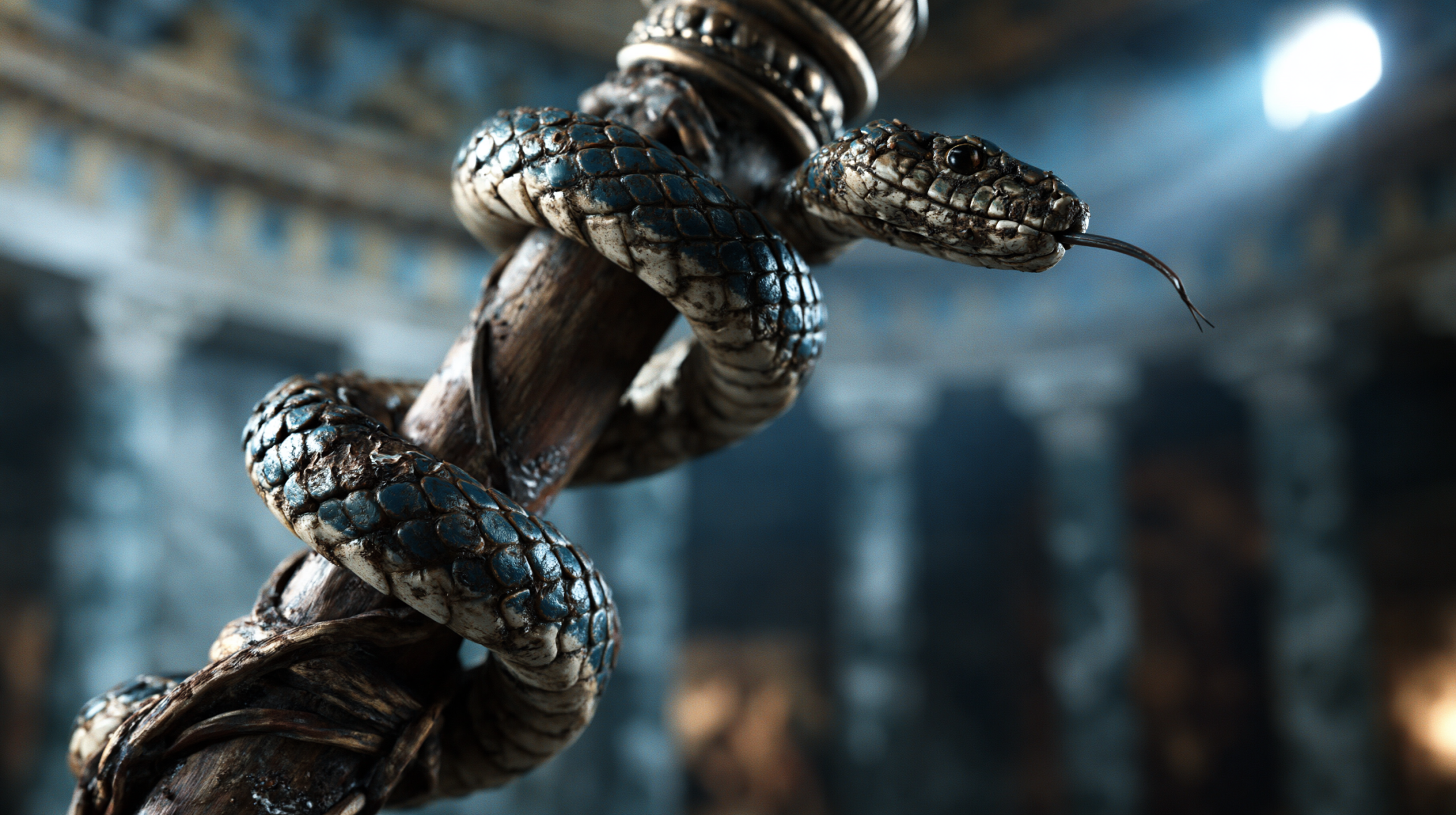
When people picture the symbol of medicine, they often imagine a staff with snakes wrapped around it. However, it’s important...
When people picture the symbol of medicine, they often imagine a staff with snakes wrapped around it. However, it’s important...
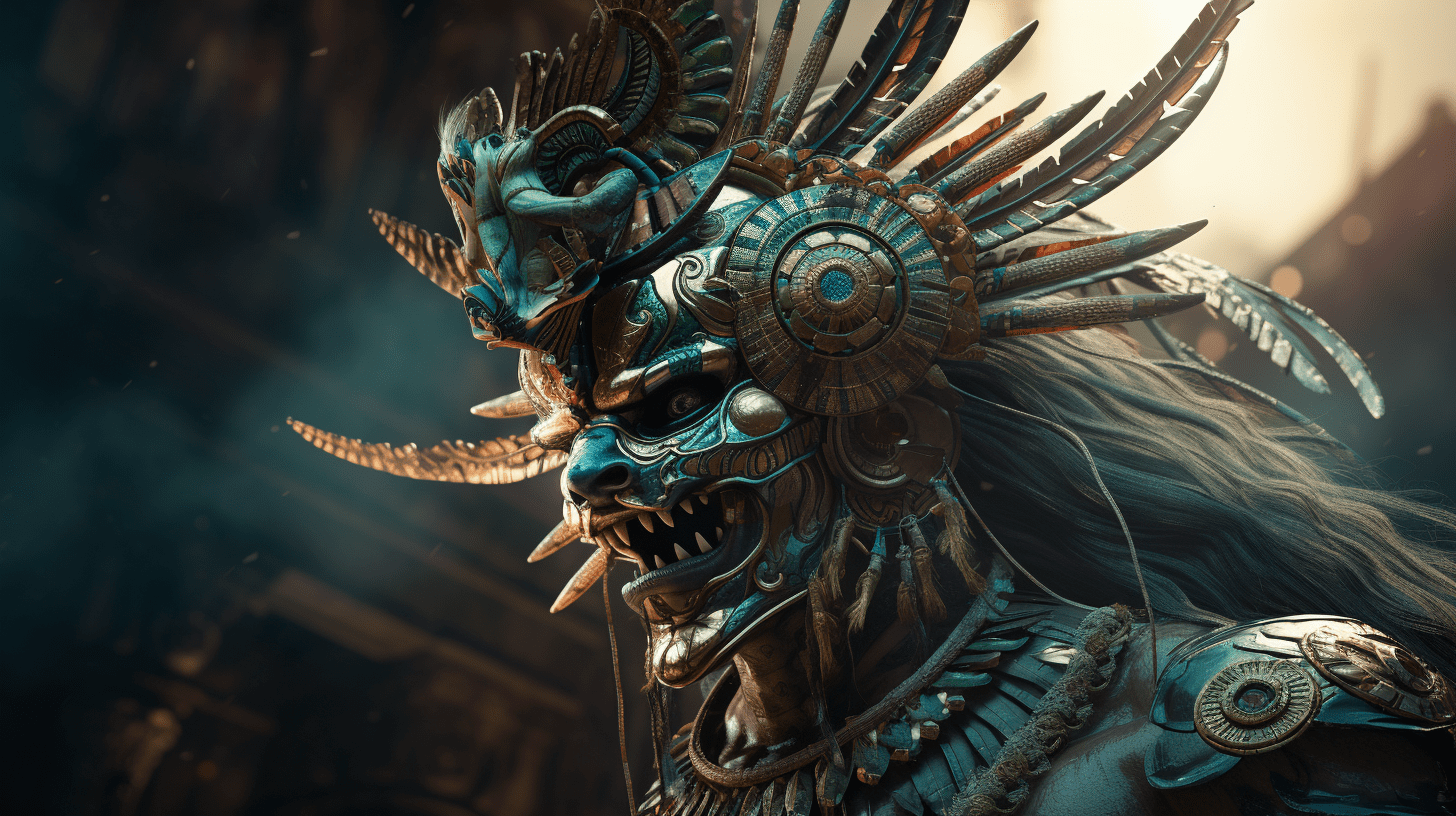
Quetzalcoatl is a deity in Mesoamerican mythology, revered by many cultures in the region, including...
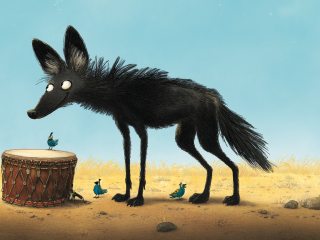
Long ago, when the sun hung lower in the sky and animals still conversed like kin, a cunning jackal roamed the dry grasslands. His golden-brown coat blended with the brittle grass. His eyes—sharp, amber, and always calculating—scanned the horizon for food. But drought had come to the land. The rivers had turned to cracked beds of earth, and the trees stood like skeletons in the sun. Prey was scarce, and the jackal’s ribs pressed tightly against his skin. Hunger had turned his stomach into a growling drum. One morning, as the jackal slinked through the savanna, he heard an odd...
You may wish to execute rituals or spells according to your magical requirements at different times of the moon’s phases. While incense isn’t mandatory for an effective ceremony, it surely can assist to set the tone. Decide what shape you want to make your magical moon incense before you begin. Incense can be made from sticks or cones, but the simplest method employs components that are tossed into a fire or burned on top of a charcoal disc. This is a recipe for loose incense, but it can also be used to make incense in sticks or cones. Why Use...

The Herb of Remembrance and Friendship The majority of us associate rosemary with its fragrant scent. Its green, piney branches can give off an herbaceous scent just by touching them. Since ancient times, rosemary has been hailed for its health benefits and is a common ingredient in many cooking dishes. Greek, Roman, Egyptian, and Hebrew societies have long valued rosemary because of its benefits for memory, digestion, and pain relief. Rosemary has played a significant role in spiritual activities for a very long time. It has also been utilized throughout history to ward off bad spirits and nightmares. It has...

Take a look around you. Perhaps you come across a chair. This is a real chair that exists in both time and space. Yet, before it became a reality, it was only a thought. In reality, everything in the room started off as a notion in someone’s head. Your thoughts—your thoughts about what is feasible and what is not—have shaped who you are today and the reality you have created. Your spirituality, your purpose—who you consider yourself to be—and your beliefs and values all impact your ideas. Every day, a person is believed to have about 60,000 thoughts. That’s more...
View a magnificent, luminous moon through a shimmering Selenite crystal while admiring the lovely Moon Goddess Selene, who is circling the sky in a gleaming chariot while wearing a crescent-shaped crown and silver wings, guiding and guarding those who are in the dark. While several goddesses were named in ancient cultures to represent the moon, the Greeks took Selene to be the moon itself. She embodies serenity, blessing, love, and light, just like her crystal does. The clarity and ethereal luminosity that selenite crystals offer are highly regarded. It is thought to contain the liquid light of spirit that lives...