

When people picture the symbol of medicine, they often imagine a staff with snakes wrapped around it. However, it’s important to note that not all snake-and-staff symbols carry the same meaning. In fact, one of the most common visual mistakes in healthcare branding, education, and public understanding is the confusion between the Rod of Asclepius and the Caduceus.
This mix-up has lasted for generations, and it still appears in logos, uniforms, ambulances, textbooks, and hospital materials. The result is a surprisingly widespread misunderstanding about the true medical symbol, the snake staff, and what it represents. If you’ve ever wondered about the Rod of Asclepius meaning or wanted to understand the broader history of medical symbols, the distinction matters more than it may seem.
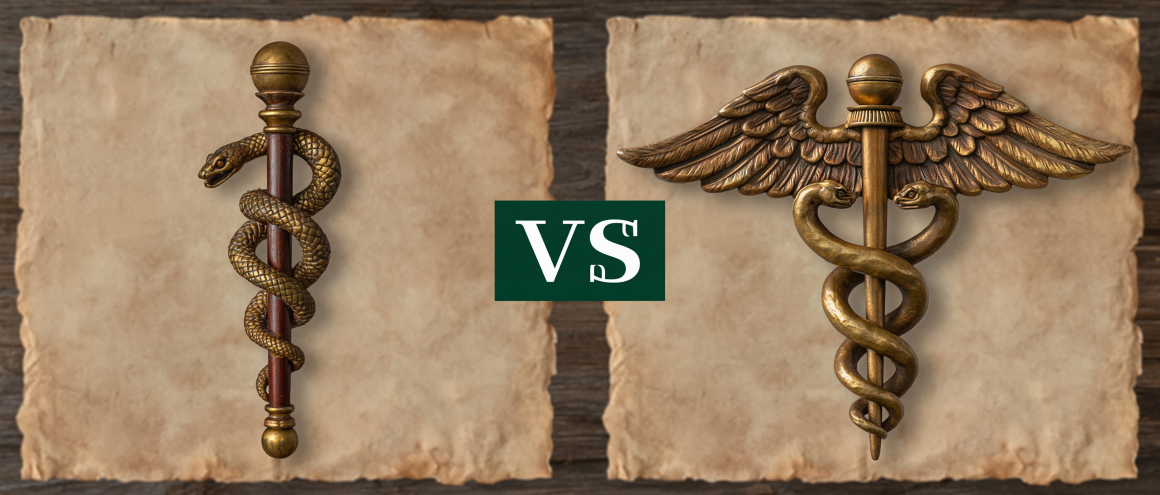
The Staff of Asclepius is the authentic traditional symbol of medicine and healing. It consists of a single serpent coiled around a rough wooden staff. Its roots reach back to ancient Greek mythology, where Asclepius was associated with healing, medical knowledge, and the care of the sick. The Caduceus, by contrast, features two snakes entwined around a winged staff and is historically linked not to medicine, but to Hermes, the Greek god associated with commerce, travel, negotiation, and sometimes trickery. One symbol stands for healing. The other stands for exchange and movement.
That difference is not a tiny technicality. It reveals how symbols carry cultural memory and how a misunderstanding can reshape public perception over time. Let’s unpack the history, symbolism, and modern confusion step by step.
The Staff of Asclepius and Its Ancient Meaning
To understand why the Staff of Asclepius became the medical emblem, it helps to start with the figure behind it. In Greek mythology, Asclepius was the god of healing and medicine. He was not merely associated with health in a vague sense; he represented the thoughtful, practiced, and almost sacred art of restoring the body and relieving suffering.
According to tradition, Asclepius was the son of Apollo and became renowned for his healing abilities. Over time, stories about him grew so powerful that shrines known as Asclepieia were established across the Greek world. These were early healing temples where people came seeking treatment, rest, purification, and divine guidance. In a sense, they combined elements of what we would now call hospitals, wellness centers, and spiritual sanctuaries.
What the symbol looks like
The Rod of Asclepius has a very specific design:
- One staff
- One snake
- No wings
That simplicity is essential. The staff suggests support, travel, and the practical work of a healer moving from place to place. The serpent represents renewal, wisdom, and transformation.

Why a snake?
At first glance, a snake may seem like a strange choice for a healing symbol. In many cultures, snakes inspire fear because of venom and danger. Yet throughout ancient history, serpents also symbolized:
- Renewal, because they shed their skin
- Rebirth and transformation, due to their cyclical appearance
- Hidden knowledge, especially in religious and medicinal traditions
- The fine line between poison and cure, a concept deeply relevant to medicine
This last point is especially striking. Medicine has always dealt with substances and interventions that can heal in one context and harm in another. Dosage, judgment, timing, and expertise matter. The serpent captures that tension beautifully.
The staff as a healing tool
The staff itself also has symbolic value. It may represent:
- The walking stick of a traveling physician
- Stability and grounding
- Authority through knowledge rather than force
- The human journey through illness toward recovery
Together, the staff and serpent form an image of healing that is deeply practical and spiritual at once. It’s not flashy. It’s not decorative. It’s purposeful.
Rod of Asclepius Meaning in Medical History
The Rod of Asclepius’s meaning goes far beyond mythology. Over centuries, it became a durable emblem of the medical profession because it reflects medicine’s core mission: to heal, to observe carefully, and to serve the sick.
A symbol rooted in care
Unlike symbols tied to power, conquest, or prestige, the Staff of Asclepius centers on healing itself. It suggests:
- Compassion toward the ill
- Skilled medical practice
- Ethical responsibility
- Respect for life and recovery
That is why the symbol has remained so enduring in professional medicine.
Connection to early healing traditions
In ancient healing temples, snakes were sometimes associated with ritual medicine. Some accounts describe the presence of nonvenomous snakes in sacred spaces associated with Asclepius. Whether viewed literally, symbolically, or ritually, the practice strengthened the connection between serpents and healing.
The symbol also emerged in a world where religion, observation, herbal treatment, and ritual all overlapped. Ancient medicine was not identical to modern scientific healthcare, of course, but the Staff of Asclepius became a bridge between those worlds. It retained symbolic power even as medicine evolved from temple healing to anatomy, surgery, pharmacology, and evidence-based practice.

The symbol in modern institutions
Today, the Staff of Asclepius is widely recognized by many physicians, medical historians, and public health organizations as the correct symbol of medicine. It appears in contexts such as:
- Medical associations
- Public health organizations
- Educational materials
- Historical medical insignia
- Professional emblems related to healthcare and healing
Its continued use reflects a desire to connect medicine not only with science but also with a long-standing ethical and cultural tradition.
The Caduceus: A Different Symbol Entirely
This is where the confusion begins.
The Caduceus is often mistaken for the medical symbol, but historically it is not the true emblem of healing. It belongs to Hermes in Greek mythology, or Mercury in Roman tradition. Hermes was associated with:
- Commerce
- Trade
- Communication
- Travel
- Diplomacy
- Mediation
- Cunning and persuasion
The Caduceus consists of:
- One staff
- Two snakes
- A pair of wings
Visually, it is more ornate than the Rod of Asclepius. It can look elegant and balanced, which may be one reason it spread so easily in design and branding. But symbolism is not just about appearance. It is about meaning.

Why the Caduceus does not mean medicine
The Caduceus has no primary historical basis as the classic emblem of medical healing. Its associations lie elsewhere. In ancient art and mythology, it represented exchange, movement, and negotiation far more than treatment or recovery.
Some later traditions occasionally broadened the meaning of the term, and symbols often evolve. Still, from a historical standpoint, the distinction remains clear:
| Symbol | Visual Features | Traditional Meaning |
|---|---|---|
| Rod of Asclepius | One snake, one staff, no wings | Healing, medicine, care of the sick |
| Caduceus | Two snakes, winged staff | Commerce, negotiation, travel, communication |
That table captures the entire issue in one glance. One is the true medical symbol, the snake and staff associated with healing. The other is a different classical emblem that became mixed into medical use later.
How the Confusion Happened
The confusion between the Rod of Asclepius and the Caduceus did not happen overnight. It developed gradually, then spread through institutional use and visual repetition.
Similar appearance, different meaning
At a quick glance, both symbols involve snakes and a staff. For people unfamiliar with classical mythology, that can be enough to blur the distinction. Once a mistaken symbol appears in a respected setting, it gains legitimacy simply by being seen.
This is how symbolic confusion often works: repetition creates authority, even when the original meaning says otherwise.
The role of design and symmetry
The Caduceus is visually symmetrical, with two snakes mirrored around a central rod and wings at the top. Designers often consider it more decorative or instantly recognizable. That aesthetic appeal likely helped it gain traction in commercial and institutional settings.

The Rod of Asclepius is simpler and less ornamental. But simplicity is part of its authenticity. It reflects healing, not display.
Institutional adoption and public imitation
One of the primary reasons for the confusion is that certain organizations, especially in the modern era, adopted the Caduceus in medical contexts. Once that happened, the symbol was copied widely in:
- Medical advertising
- Uniform patches
- Logos and insignia
- Commercial healthcare materials
- Popular media depictions of doctors and medicine
This repetition made the Caduceus look “official” to the general public, even when historians and medical scholars continued to identify the Rod of Asclepius as the more accurate symbol.
The History of Medical Symbols and Why They Matter
The history of medical symbols is not just an academic footnote. Symbols shape identity. They communicate values quickly, often without words. In medicine, that matters a great deal, because trust, ethics, and public understanding are central to healthcare.
Symbols are condensed stories
A medical emblem tells patients and professionals what a field stands for. The right symbol can imply:
- Healing over profit
- Care over spectacle
- Responsibility over status
- Wisdom guided by ethics
That’s why the Rod of Asclepius resonates so strongly. It points directly to healing and the physician’s moral role.

Medicine has always used symbolic language
Across civilizations, healing traditions relied on symbols to communicate legitimacy, safety, sacred duty, and expertise. These could include:
- Serpents
- staffs
- bowls
- herbs
- suns or stars
- crosses or other protective motifs
One famous pharmacy-related emblem, for example, is the Bowl of Hygieia, which shows a serpent and a bowl. Hygieia, in Greek tradition, was associated with health, cleanliness, and prevention. This emblem shows how closely classical healing symbols are interconnected but also how each one had a distinct meaning.

Why accuracy still matters today
Some people argue that because the Caduceus has been used in healthcare settings for so long, it has effectively become a medical symbol too. There is some truth to the idea that symbols evolve through use. Language and imagery are living systems.
Still, historical accuracy is relevant for at least three reasons:
- Professional identity
Healthcare is grounded in a long ethical tradition. Using the correct symbol honors that history. - Educational clarity
Students, patients, and the public benefit from understanding what these symbols really mean. - Cultural literacy
Knowing the difference helps people read visual culture more critically instead of accepting repetition as truth.
In short, meaning matters. The symbol of medicine should point to healing, not merely resemble it.
Snake Symbolism in Medicine: Fear, Renewal, and Knowledge
The snake remains one of the most fascinating parts of the medical symbol snake staff. It feels paradoxical, and that paradox is precisely why it works so well.
A creature of danger and cure
Snakes can kill, but their venom has also inspired medical research and therapeutic applications. Symbolically, this creature reflects an enduring truth of medicine:
- Powerful remedies can also be dangerous
- The same substance can heal or harm depending on use
- Knowledge transforms risk into care
This duality has echoed through medicine for centuries.

Shedding skin as renewal
One of the most common explanations for serpent symbolism is the act of shedding skin. Ancient observers saw the act as a sign of renewal, regeneration, and a kind of rebirth. For a medical tradition devoted to recovery, this image is almost perfect.
Wisdom from close observation
Medicine depends on watching carefully: symptoms, patterns, responses, and changes over time. The serpent, alert and silent, became a fitting companion to this mode of attention. It suggests intelligence that is patient rather than loud.
That’s a wonderfully medical quality, honestly. A proper diagnosis rarely begins with drama. It begins with observation.
Why the Rod of Asclepius Remains the Better Medical Symbol
If the goal is to represent medicine faithfully, the Staff of Asclepius remains the strongest and most historically grounded choice.
It matches the profession’s core purpose
Medicine is about healing, relieving suffering, and guiding patients through illness. The Rod of Asclepius directly represents that mission.
It carries ethical depth
Because it comes from a healing tradition, the symbol implies service and responsibility. It feels less commercial, less decorative, and more aligned with the moral center of medicine.
It avoids symbolic confusion
Using the correct emblem helps prevent the blending of healthcare with unrelated symbolic meanings like commerce or negotiation. In an age when patients already worry about the corporatization of healthcare, that distinction has some extra bite.
It is recognized by scholars and many professionals
Medical historians and many health organizations continue to affirm that the Rod of Asclepius is the authentic medical symbol. This consensus gives it enduring credibility.
Rod of Asclepius vs. Caduceus: Quick Comparison
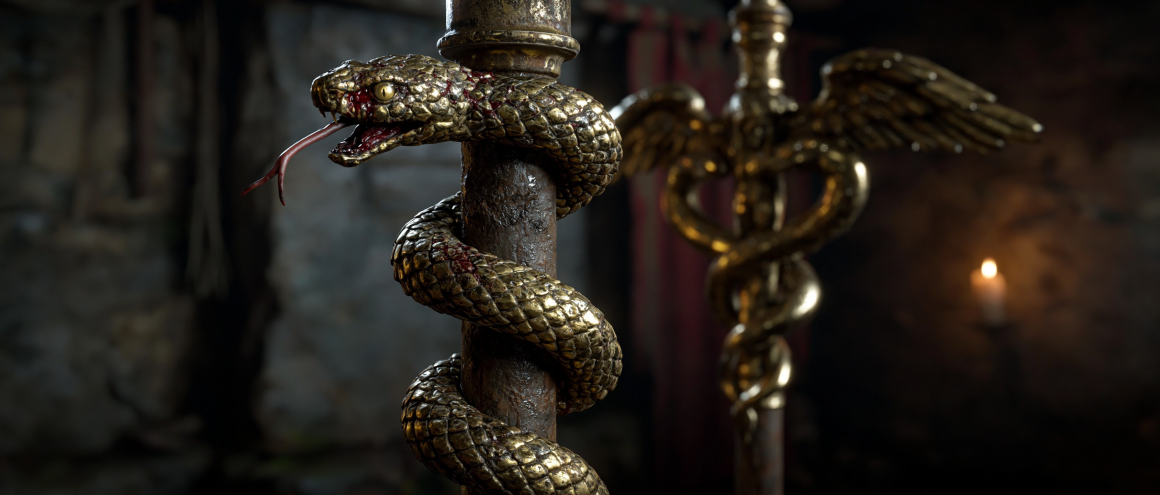
Here’s a concise side-by-side comparison to make the distinction unmistakable.
| Feature | Rod of Asclepius | Caduceus |
|---|---|---|
| Number of snakes | One | Two |
| Wings | No | Yes |
| Mythological association | Asclepius | Hermes / Mercury |
| Primary meaning | Healing, medicine | Commerce, travel, negotiation |
| Historical accuracy as medical symbol | High | Low |
| Modern confusion | Often replaced incorrectly | Frequently mistaken for medical emblem |
The key takeaway here is simple: if there is one snake and no wings, you are looking at the traditional symbol of medicine.
What This Symbol Teaches Us About Medicine Itself
The story of the Staff of Asclepius is not just about correcting an iconographic error. It offers a deeper lesson about medicine’s identity.
Healing is both science and tradition
Modern medicine is evidence-based, technological, and highly specialized. Yet its symbolic language reminds us that healthcare also rests on ancient human concerns:
- suffering
- mortality
- hope
- trust
- renewal
- ethical duty
The Staff of Asclepius captures that continuity.
The best symbols are precise
A symbol gains power when it says exactly what it means. The Rod of Asclepius does that elegantly. It is visually simple, historically rich, and morally aligned with medicine’s purpose.
Misunderstandings spread easily
The Caduceus became linked with medicine largely through repetition, not original meaning. That should remind us that public knowledge is often shaped by visibility rather than accuracy. Once an error looks official, it can become stubbornly durable.
This is true of symbols but also of facts more broadly. Human culture, charmingly and frustratingly, is very adept at copying first and checking later.
Final Thoughts
The true medical symbol is not the winged staff with two snakes. It is the Staff of Asclepius: one serpent, one rod, no wings. Its meaning is rooted in healing, renewal, medical wisdom, and the care of the sick. When people search for the meaning of the Rod of Asclepius, they are really asking a larger question about what medicine represents. This quiet, ancient emblem holds the answer.
Understanding the distinction between the Rod of Asclepius and the Caduceus also provides a broader perspective on the history of medical symbols. These images are not random decorations. They reflect values, professions, and deep cultural memory. The medical symbol snake and staff has endured because it expresses something essential: medicine is a disciplined act of healing, shaped by knowledge and guided by responsibility.
In a world filled with logos and visual shorthand, the Staff of Asclepius continues to convey the most with the least. A simple staff. A single serpent. A centuries-old reminder that medicine, at its heart, is about restoring life and relieving suffering.