A Nigerian Folktale of Abundance, Greed, and the Cost of Wastefulness
Long ago—before the first iron was forged in the fires of Nok, before the kingdoms of Ife and Benin carved their legacies into bronze—there was a time in the lands that would one day be called Nigeria when the sky did not loom high and distant above humanity.
It rested close.
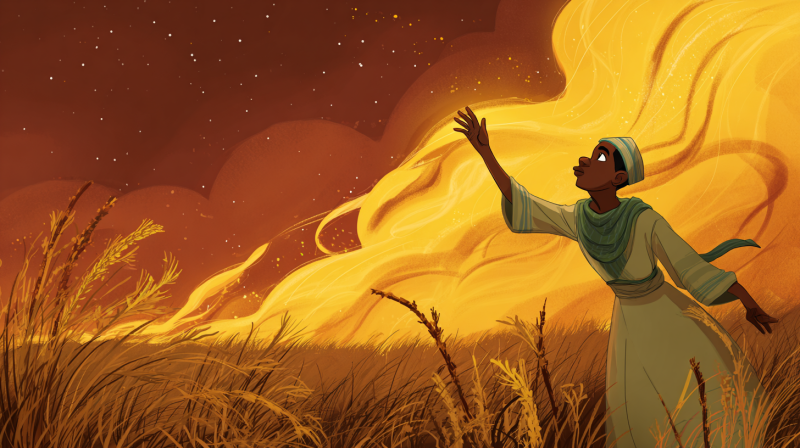
So close that a tall woman standing on her toes could pluck a piece of it with her fingers.
And the sky was not empty.
It was food.
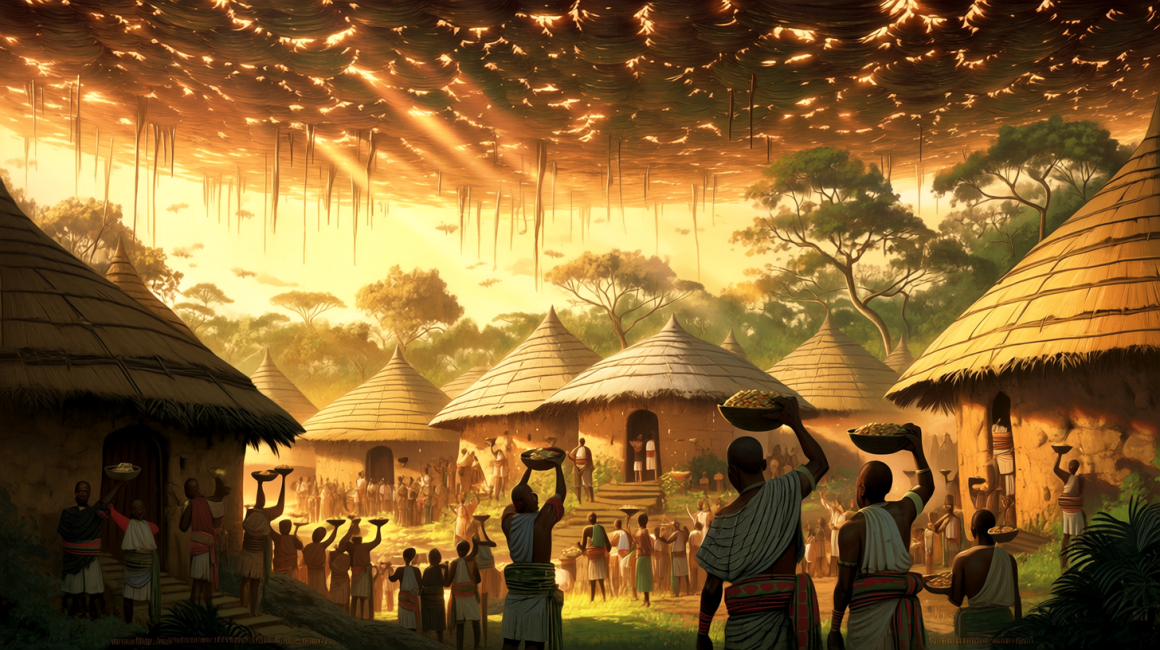
In those ancient days, the sky hung low over the villages like a vast blue canopy of sustenance. It shimmered softly in the heat of the sun and glowed silver beneath the moon. But it was not made of clouds and wind as it is now. It was rich, thick, and nourishing—like roasted yam blended with pounded cassava and palm oil.
When hunger stirred in a household, no one worried.
A mother would step outside her round mud hut, lift her calabash bowl, stretch her arm upward, and gently scrape away a portion of the sky. The substance would fall into her bowl—warm, fragrant, and ready to eat.
Families gathered beneath that living ceiling and ate until they were satisfied. Children laughed with sticky fingers. Elders told stories with full bellies. Hunters returned from the forest untroubled by scarcity.
There was only one rule.
The Sky, in its gentle wisdom, spoke clearly to the people:
“Take only what you need. Waste nothing.”
And for a time, the people obeyed.
In the beginning, gratitude lived in every home.
Women gathered just enough sky-food to prepare thick stews. Men returned from fishing in winding rivers that shimmered through the savannah. Children carried woven baskets filled with fruit.
The elders reminded the young ones:
“Enough is a gift. To take more than enough is to invite loss.”
The sky watched.
And it remained close.
But time, like the harmattan wind, changes everything.
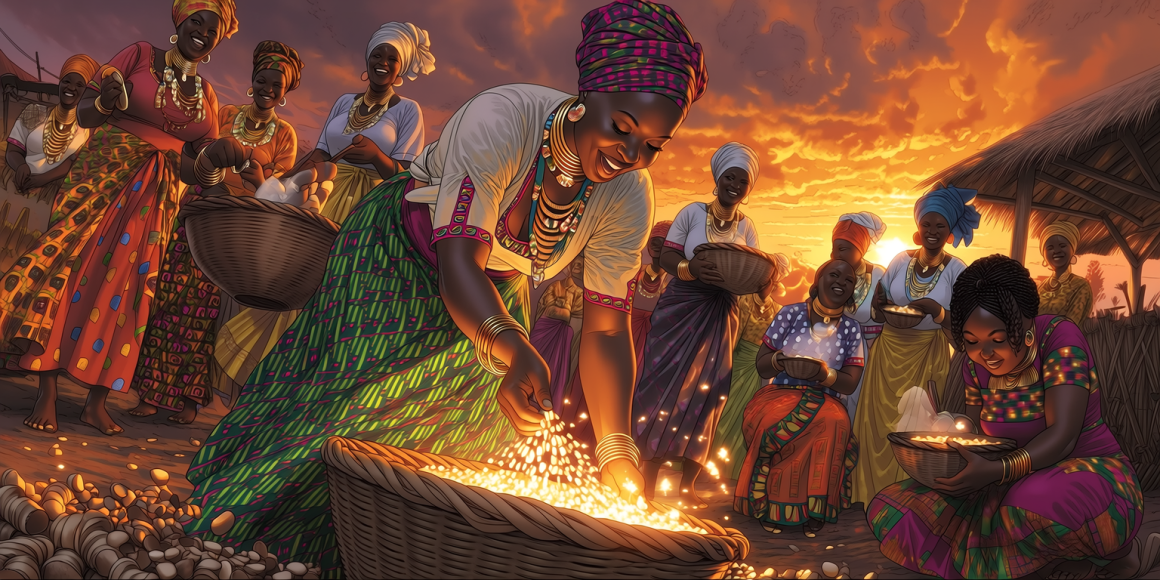
One season, a great celebration was announced in the village. A chief’s daughter was to be married. Drums thundered. Goats were slaughtered. Palm wine flowed like river water.
The women were tasked with preparing a feast grander than any before it.
Among them was a woman known for her pride. She was admired for her cooking, but she loved admiration more than wisdom. Determined to impress the entire village, she lifted her largest basket and stepped outside.
Instead of taking what was needed…
She scraped and scraped and scraped.
Large chunks of the sky fell heavily into her basket. But in her rush, pieces slipped from her arms and scattered onto the earth. Children stepped on them. Dogs sniffed and walked away. Some pieces melted into the dirt, uneaten.
Still, she scraped more.
“Better too much than too little,” she muttered.
That night, the feast overflowed with food. Plates were piled high. But even as the drums beat and the dancers spun beneath the stars, leftovers lay forgotten in the dust.
The sky felt it.
The sky remembered its warning.
The next morning, something had changed.
A mother stepped outside with her calabash bowl.
She reached up.
Her fingers brushed… nothing.
The sky had lifted—just beyond her reach.
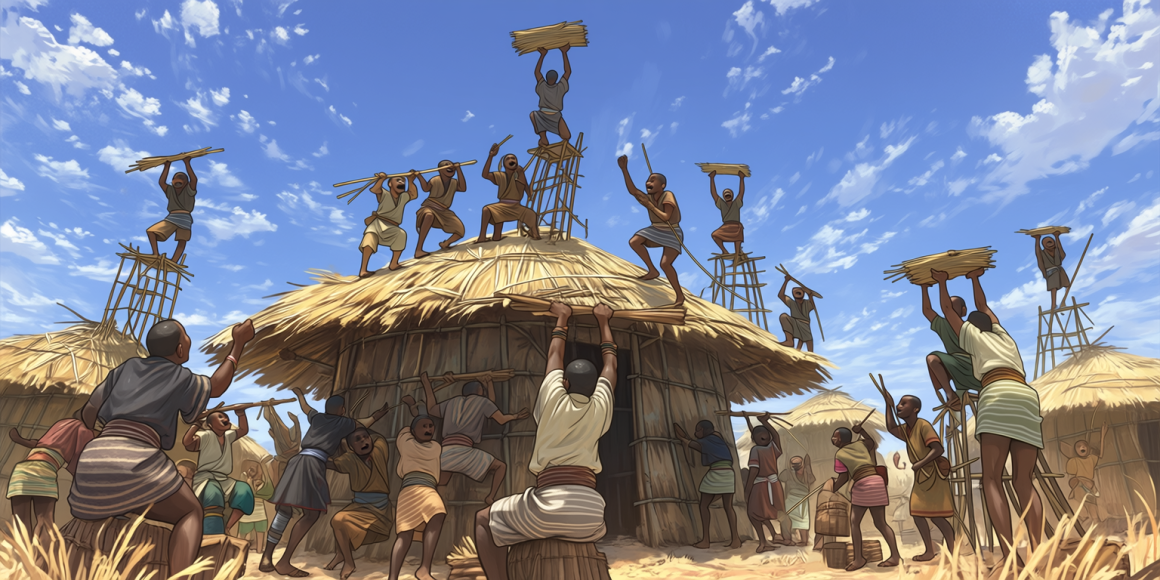
Villagers murmured nervously. Some fetched stools. Others climbed onto rooftops.
They could still touch it—but barely.
The sky rumbled softly.
“I said, take only what you need.”
Fear swept through the village like a wildfire amidst dry grass.
The proud woman lowered her gaze.
But instead of repentance spreading quickly, irritation did.
“Why should we suffer?” some muttered. “It was only a little waste.”
And so, rather than learning, some continued scraping carelessly when they could.
More fell.
More was wasted.
And each time, the sky rose a little higher.
Days passed.
Then weeks.
With every act of carelessness, the sky climbed farther away.
People built ladders.
They stacked stones.
They stretched on the shoulders of neighbors.
But one morning, even the tallest hunter standing on the highest roof could not reach it.
The sky had risen beyond all grasp.
It no longer hovered like a gift within reach. It stretched vast and blue, distant and untouchable.
Hunger entered the world that day.
For the first time, humans had to till the soil. They had to plant seeds. They had to wait for rain. They had to work.
The earth became both a blessing and a burden.
The people wept and cried out to the sky.
But it answered only with silence—and clouds drifting far above.
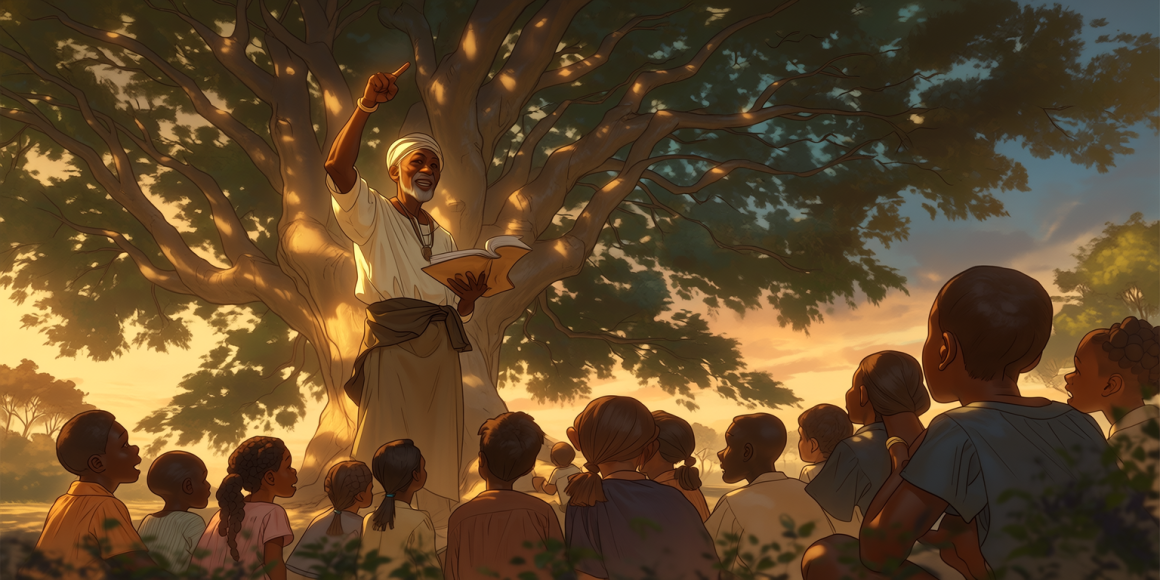
To this day, in many parts of Nigeria, elders tell this tale to children sitting beneath mango trees at twilight.
They point upward.
“Once,” they say, “the sky fed us.”
But human wastefulness drove it away.
This folktale is shared among various Nigerian communities, including among the Igbo and the Yoruba, each with slight variations in detail. In some tellings, it is greed. In others, laziness. In others still, simple carelessness.
But the message remains the same:
Abundance without gratitude becomes loss.
Once, the sky was close enough to touch.
It was generous. It was near. It was enough.
But humanity always wanted more.
So the sky rose.
And it remains there still—a silent reminder hanging above every field, every city, every village:
Take only what you need.
Waste nothing.
Honor the gift.
Or watch it drift away.